The real cost of Клининговые услуги: hidden expenses revealed
The $200 Cleaning Bill That Actually Cost $847
Last month, my friend Sarah hired a cleaning company for her small office. The quote? A reasonable $200 for a deep clean. Three weeks later, she'd shelled out $847. No, they didn't rob her—she just discovered what most businesses learn the hard way: the advertised price for professional cleaning services is rarely the final number you'll pay.
Here's the thing about cleaning services (or "клининговые услуги" as our Russian-speaking friends call them): the industry has more hidden fees than a budget airline. And unlike that extra charge for checking a bag, these costs can seriously derail your budget if you're not paying attention.
The Base Quote Illusion
Most cleaning companies lead with an attractive hourly rate or square-footage price. You'll see "$25 per hour" or "$0.15 per square foot" plastered on their websites. Sounds straightforward, right?
Wrong.
That base rate typically covers basic vacuuming, dusting, and trash removal. Everything else? That's extra. And I mean everything.
The Sneaky Add-Ons Nobody Warns You About
Window cleaning inside your office? Add 15-30% to your bill. Carpets need shampooing instead of just vacuuming? Tack on another $0.25-$0.50 per square foot. Got a kitchen that actually gets used? Expect a "deep cleaning surcharge" of 20-40% because apparently, cleaning a microwave splattered with someone's exploded lunch requires special compensation.
One property manager I spoke with—let's call him Mike—told me about a 5,000 square foot office that was quoted at $750 monthly. After factoring in bi-weekly kitchen deep cleans, monthly carpet treatments, and quarterly window washing, the actual monthly average hit $1,240. That's a 65% difference from the original quote.
Equipment and Supply Charges: The Silent Budget Killer
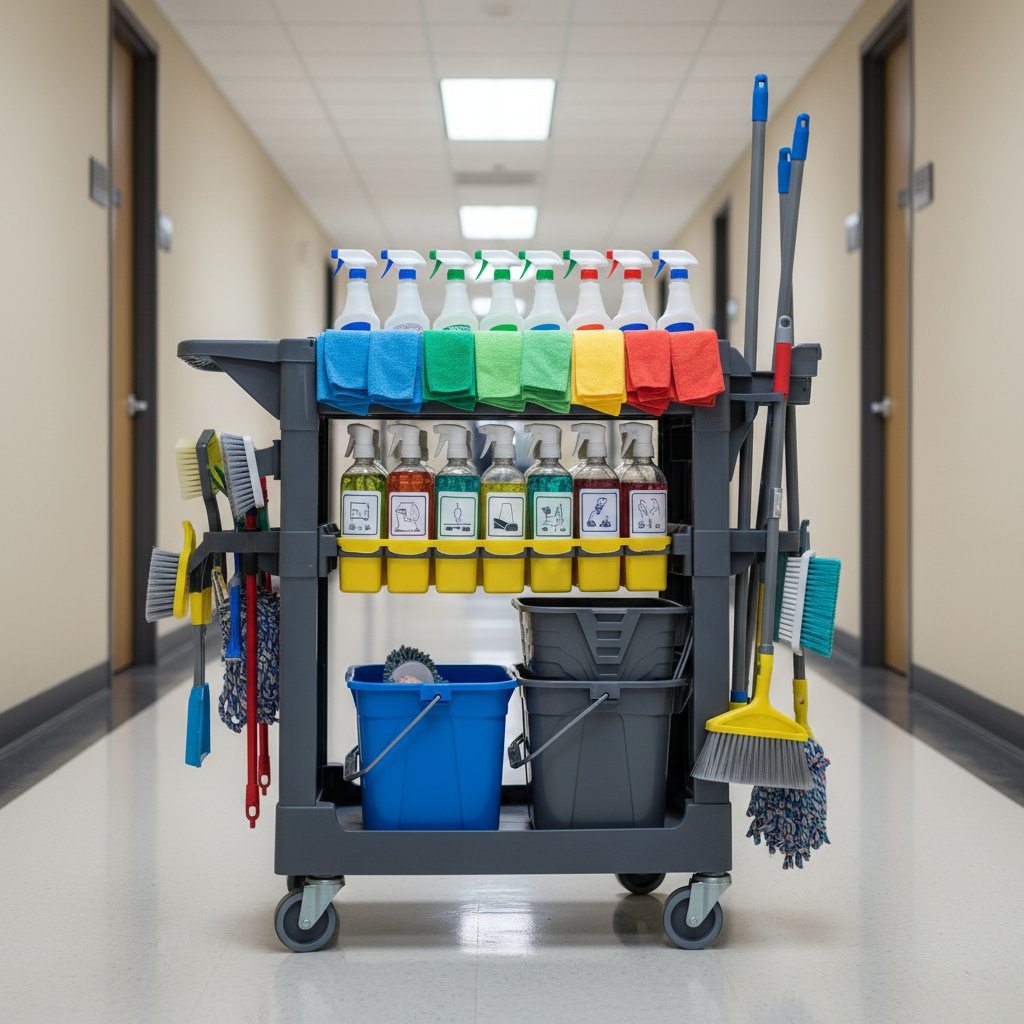
Here's where things get really interesting. Some companies include cleaning supplies in their rates. Others charge separately. And some do this sneaky middle-ground thing where "standard supplies" are included, but anything "specialized" costs extra.
What counts as specialized? According to industry data, about 40% of cleaning companies classify these everyday items as "premium" supplies that warrant additional charges:
- Disinfectants (yes, really—especially post-pandemic)
- Stainless steel cleaner
- Wood polish
- Glass cleaner beyond basic Windex
- Eco-friendly or hypoallergenic products
These charges typically run $15-$45 per visit. Doesn't sound like much until you multiply it by 52 weeks. That's potentially $2,340 annually that never appeared in your initial quote.
The Frequency Trap
Most advertised rates assume you're booking regular, recurring service. Daily cleaning? You might actually get a discount. But if you only need service twice a month or on-demand? Expect to pay 25-50% more per visit.
A commercial cleaning industry report from 2023 found that one-time or irregular cleaning jobs command prices 30-45% higher on average than the same work performed on a weekly contract. The reasoning? Setup time, scheduling inefficiency, and "lack of relationship" with the space.
After-Hours and Weekend Premiums
Need your office cleaned at 6 AM before employees arrive, or on Sunday when everyone's gone? That'll be an extra 20-35% on top of your base rate. Some companies charge even more—up to 50% premiums for holiday weekend service.
Insurance and Liability: The Hidden Safety Net
Reputable cleaning companies carry liability insurance and workers' compensation. These aren't optional nice-to-haves—they're essential protections. But someone has to pay for them, and that someone is you.
These costs are usually baked into the hourly rate, but here's the catch: if you request services outside the company's standard scope (like cleaning up after construction or dealing with potential biohazards), they may require additional insurance riders. This can add $50-$200 per job, depending on the risk level.
What Industry Insiders Actually Say
I spoke with Elena, who's managed cleaning operations for a mid-sized company for seven years. Her take? "Clients focus on the per-hour rate, but that's maybe 60% of what they'll actually spend. The other 40% comes from all the stuff they assume is included but isn't."
She broke down a typical $1,000 monthly cleaning contract like this:
- Base cleaning service: $600
- Supplies and equipment: $120
- Specialty services (kitchen, restrooms): $180
- After-hours premium: $100
"Nobody complains about the $600," Elena said. "They lose their minds over the other $400 they didn't expect."
The Contract Fine Print That Costs You Money
Minimum service agreements are standard in the industry. Cancel before your 6-month or 12-month term? Termination fees range from $150 to an entire month's service charge. Need to reduce your cleaning frequency mid-contract? Some companies charge restructuring fees of $75-$200.
Then there's the automatic renewal clause that about 70% of cleaning service contracts include. Miss that 30-day or 60-day cancellation window, and you're locked in for another term—even if you're trying to switch providers.
Key Takeaways
- Expect the real cost to be 30-65% higher than initial quotes once all services and fees are included
- Always ask for an itemized breakdown of what's included in the base rate versus what costs extra
- Supply charges can add $780-$2,340 annually—clarify who provides what upfront
- Irregular or after-hours service carries premiums of 20-50% above standard rates
- Read contracts carefully for termination fees, minimum commitments, and auto-renewal clauses
- Request a three-month cost projection based on your actual needs, not just the base service
Getting to the Real Number
So how do you avoid Sarah's $200-turns-into-$847 nightmare? Simple: stop asking "what's your hourly rate?" and start asking "what will this actually cost me per month, all-in?"
Provide detailed information about your space, your expectations, and your schedule. Ask for a comprehensive quote that includes supplies, specialty services, and any premiums that apply to your situation. If they can't or won't provide that level of detail, you're probably looking at hidden fees down the road.
The cleaning industry isn't inherently deceptive—but it is structured in a way that makes true cost comparison nearly impossible without digging past the surface numbers. The companies that survive long-term are usually the ones charging fair rates for everything, not the ones with the lowest advertised price and the longest list of surprise add-ons.
Your office needs to be clean. Just make sure you know what you're actually paying for that cleanliness before you sign anything.